
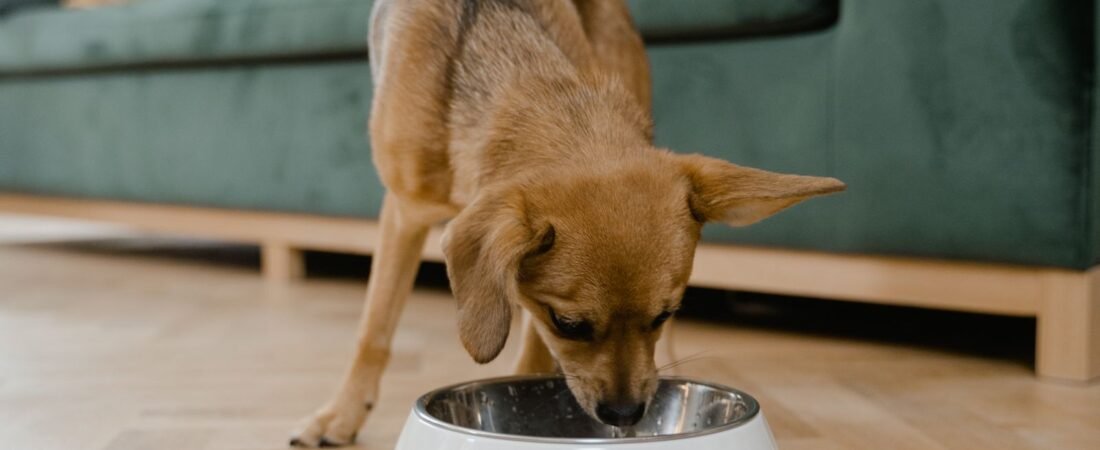
Feeding a pregnant dog is not about feeding her twice as much from day one. It is about feeding her the right food, in the right way, at the right time. Her energy needs change as the pregnancy progresses: in the first weeks, she needs little more than usual, but by the last weeks — and especially once she is nursing — she needs considerably more. Getting the timing right helps her stay healthy, supports the puppies’ growth, and makes the weeks after birth easier too.
This guide explains what to feed a pregnant dog by trimester: what stays the same, what changes, and how to handle the practical side — meals, treats, and the foods to avoid. As always, your vet knows your dog best, so treat this as a guide to discuss with them, not a prescription.
Feeding by trimester at a glance
| Trimester | What is happening | Feeding approach |
|---|---|---|
| First (weeks 1 to 3) | Embryos implant; little visible change | Normal balanced diet; no big changes |
| Second (weeks 4 to 6) | Puppies grow faster; appetite rises | Gradually increase food; consider a higher-energy diet |
| Third (weeks 7 to 9) | Rapid growth; belly limits meal size | Smaller, more frequent meals; keep food close by |
| After birth | Nursing; energy needs at their highest | Plenty of food and water; ask your vet for guidance |
First trimester: weeks 1 to 3
In the first three weeks, most dogs do not need a different diet. Her usual complete, balanced food is fine, and there is no need to add extras or switch foods suddenly. Some dogs eat a little less for a few days — a mild, short-lived dip in appetite is common around this stage — so offer her normal meals, keep fresh water available, and do not worry if she skips the odd meal. If she refuses food for more than a day, or vomits repeatedly, check with your vet. For what else is typical at this stage, see our guide to the signs of pregnancy at 3 weeks.
Second trimester: weeks 4 to 6
From around the fourth week, the puppies start growing more quickly, and your dog’s appetite usually increases to match. This is the time to start increasing her food gradually, rather than all at once. Many vets suggest moving to a higher-energy, nutrient-dense food at this stage — often a growth or puppy formula — because it provides more energy and nutrients in each bite, which matters as the puppies grow and her belly starts to fill out. Make any food change gradually, over several days, mixing the new food in with the old so her digestion can adjust. Keep her weight in check with a weekly weigh-in, and ask your vet about how much to feed, as the right amount depends on her size, breed, and litter size.
Third trimester: weeks 7 to 9
In the last three weeks, the puppies take up a lot of space, and your dog may not be able to eat a large meal in one sitting. Smaller, more frequent meals — typically three or four a day — usually work better than one or two big ones. Her energy needs are now at their highest before birth, so keep the food energy-dense and easy to digest, and always keep fresh water close by. As her due date approaches, she may eat less for a day or so before labour — that is common — but if she stops eating entirely for more than a day, or seems unwell, contact your vet. For the full timeline of these final weeks, see our guide to how long dogs are pregnant.
What to feed — and what to avoid
A complete, balanced commercial dog food that is appropriate for her life stage is the simplest and safest choice for most pregnant dogs. It is formulated to provide the nutrients she needs, without the guesswork of home-cooked diets. If you prefer to feed a home-prepared diet, talk to your vet first, as it is easy to miss key nutrients during pregnancy.
A few foods should always be avoided: chocolate, grapes and raisins, onions and garlic, xylitol (found in some sugar-free products), and cooked bones, which can splinter. Raw meat and unwashed vegetables also carry risks, so keep her food clean, fresh, and stored properly. Treats are fine in small amounts, but they should not replace meals — a few small, healthy treats a day are plenty.
A practical feeding routine
- Keep meals regular. Feed at the same times each day, in a quiet spot, and give her time to eat without being rushed.
- Split meals in late pregnancy. Three or four smaller meals a day are usually easier for her than one or two large ones.
- Always have fresh water available. Pregnant and nursing dogs drink more than usual, so check the bowl often.
- Weigh her weekly. A steady, gradual weight gain is typical; sudden changes in either direction are worth mentioning to your vet.
- Do not overfeed early. Extra weight in the first half of pregnancy can make the birth harder, so increase food gradually as her needs rise.
- Keep the food close after birth. Once the puppies arrive, she will not want to leave them for long, so put food and water near the whelping box.
After birth: feeding a nursing mum
Once the puppies are born, your dog’s energy needs rise sharply — nursing a litter takes a lot out of her. Keep feeding the higher-energy food she was eating in late pregnancy, offer plenty of food and water, and let her eat as much as she needs within reason. Her appetite will usually be very good, and she may need several meals a day. If she seems to be losing weight, is not eating well, or the puppies are not gaining weight, check with your vet promptly.
Frequently asked questions
Should I switch my pregnant dog to puppy food?
Many vets suggest a growth or puppy formula from around the middle of pregnancy, because it is more energy-dense. Ask your vet what suits your dog, and change foods gradually over several days.
How much more should a pregnant dog eat?
It depends on her size, breed, and litter size, and it rises gradually through pregnancy. As a rough guide, her needs increase modestly in the middle weeks and more sharply in the last weeks and while nursing. Your vet can give you a plan for your dog.
Can I give my pregnant dog extra treats or human food?
Small, healthy treats are fine, but they should not replace meals. Avoid the foods listed above, and keep treats to a small part of her daily intake.
What if my pregnant dog will not eat?
A short dip in appetite can be normal in early pregnancy, and a reduced appetite just before labour is common too. If she refuses food for more than a day, or seems unwell, contact your vet.
The bottom line
Feeding a pregnant dog is a gradual process: keep her normal balanced diet in the first trimester, increase food steadily in the second, and switch to smaller, more frequent meals in the third, when her belly is full and her energy needs are at their highest. Choose a complete, balanced food, avoid the foods that are unsafe for dogs, keep fresh water available, and weigh her weekly. And when in doubt, ask your vet — a quick conversation about her diet is one of the simplest ways to support a healthy pregnancy and a healthy litter.
Sources
- American Kennel Club (AKC) — Feeding a pregnant dog
- American Veterinary Medical Association (AVMA) — Pet nutrition resources
- Merck Veterinary Manual — Nutrition in canine pregnancy
Photo: MART PRODUCTION / Pexels