
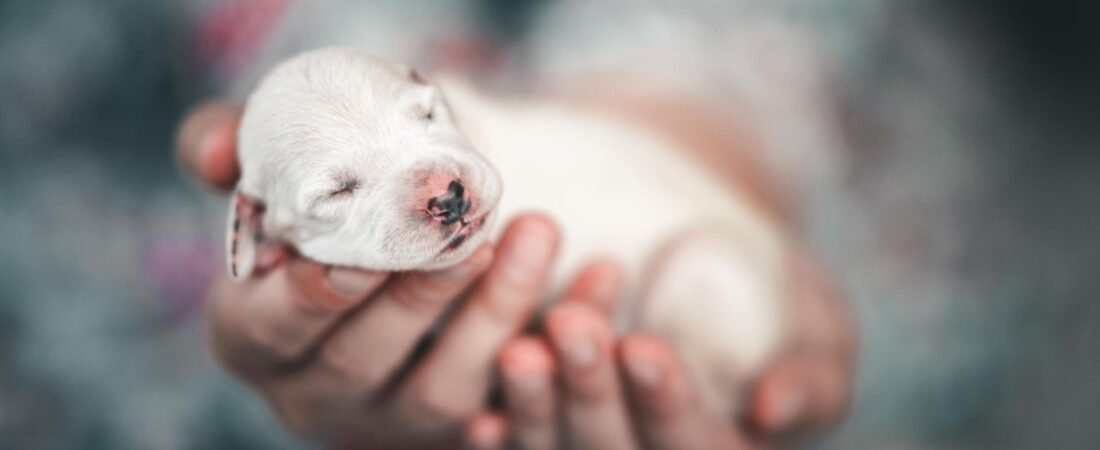
A puppy changes more in their first year than at almost any other time in their life. In twelve short months, they go from a tiny, helpless newborn to a gangly teenager who is nearly full-grown. If you know what to expect at each stage, you can enjoy the changes — and give your puppy the right care at the right time.
This guide walks through puppy growth from birth to 12 months, stage by stage. Every puppy is different, and small and large breeds grow at different speeds, but the overall pattern is remarkably similar.
Puppy Growth Stages at a Glance
Use this table as a typical guide. Small breeds often reach adult size by 9 to 12 months, medium breeds by 12 to 14 months, and large and giant breeds may keep growing until 18 to 24 months.
| Age | Stage | What is happening |
|---|---|---|
| Birth to 2 weeks | Neonatal | Eyes and ears closed; sleeps and nurses most of the time |
| 2 to 4 weeks | Transitional | Eyes and ears open; first wobbly steps and sounds |
| 3 to 12 weeks | Socialisation | Learns about people, other dogs and the world |
| 3 to 6 months | Juvenile | Rapid growth, teething, lots of energy and learning |
| 6 to 12 months | Adolescence | Growth slows, hormones change, testing boundaries |
Birth to 2 Weeks: The Neonatal Stage
Newborn puppies are completely dependent on their mother. Their eyes and ears are closed, they cannot regulate their own body temperature well, and they spend most of their time sleeping and nursing. They find their mother by scent and touch, and they need warmth, quiet and gentle handling.
At this stage, the best care is mostly about the mother: a warm, clean whelping area, good food and water for her, and minimal disturbance. Puppies should gain weight steadily in their first two weeks. If a puppy is not gaining weight, seems cold or cries a lot, check with your vet promptly.
2 to 4 Weeks: The Transitional Stage
Between two and four weeks, puppies open their eyes and ears and start to explore. Their first steps are wobbly, their hearing is still developing, and they begin to respond to light, sound and touch. They also start to play with their littermates, which teaches them bite control and dog manners in a gentle, natural way.
This is also when puppies begin to move away from their mother to relieve themselves, and when they may start to show interest in soft, moist food as well as milk. Keep handling calm and short, and let the puppies set the pace.
3 to 12 Weeks: The Socialisation Stage
The socialisation stage is one of the most important parts of a puppy’s life. Between about three and twelve weeks, puppies are especially open to new experiences. What they meet now — different people, sounds, surfaces, gentle handling and other friendly dogs — helps shape how confident they will be as adults.
Most puppies go to their new homes at around eight weeks, which falls right in the middle of this stage. That makes your first weeks together a real opportunity. Keep introductions positive and brief, use praise and treats, and avoid overwhelming your puppy. Short, happy experiences are far better than long, stressful ones. If you are unsure how much socialisation is right for your puppy, your vet can advise you for your area and your puppy’s age.
Learning at home
At home, start simple routines: regular meals, toilet breaks after waking, eating and playing, a comfortable bed, and short training sessions of just a few minutes. Puppies learn best with patience and repetition, not with long lessons.
3 to 6 Months: The Juvenile Stage
From three to six months, puppies grow fast. Their bones and muscles are developing quickly, their adult teeth start to replace puppy teeth, and their energy seems endless. This is also when many puppies go through a fear period, when new things can seem worrying for a few days. Gentle reassurance and calm, positive exposure help them through it.
Teething can make puppies chew more, so offer safe chew toys and keep shoes, cables and small objects out of reach. Keep exercise gentle and age-appropriate — short walks and play sessions are better than long runs or repeated jumping, which can strain growing joints. Your vet can help you judge the right amount of exercise for your puppy’s breed and size.
6 to 12 Months: Adolescence
By six months, many puppies look almost grown up, but they are not adults yet. Adolescence brings hormonal changes, more independence and, often, a bit of boundary-testing. A puppy who knew “sit” perfectly at four months may suddenly seem to have forgotten it. That is normal, not naughty — they are learning to make their own choices.
Keep training consistent, keep rewarding the behaviour you want, and keep routines steady. This is a good time for a training class, which gives your puppy social time and gives you support through the teenage months. Growth slows during this stage, but large breeds in particular may still have a lot of growing to do after their first birthday.
How Growth Differs by Size
Small breeds grow up fastest. A Chihuahua or Dachshund may be close to adult size by nine to twelve months. Medium breeds usually finish growing at around twelve to fourteen months. Large and giant breeds grow for longer — often until eighteen to twenty-four months — and they need careful feeding and gentle exercise while their bones are still developing.
That is why a puppy’s age in human years is not a straight line. Our guide Dog Years to Human Years Chart (By Size) explains how the first two years count for more than later years. And if you are wondering how long your puppy may live as an adult, read How Long Do Dogs Live? Average Lifespan by Breed Size for typical ranges by size.
A Practical First-Year Checklist
Keep the first year simple and steady. Feed a balanced diet suited to puppies, in measured meals. Give your puppy fresh water, a safe place to sleep, regular toilet breaks and short, positive training sessions. Introduce new sights and sounds gradually, keep vet visits routine, and watch their weight and growth — your vet can check that they are growing at a healthy pace.
Write down the changes you notice: when their ears stand up, when they lose a puppy tooth, when they first manage a whole night without a toilet break. It is a lovely record of a fast-moving year, and it can also help your vet if you ever need to describe how your puppy has been developing.
Frequently Asked Questions
When is a puppy fully grown?
It depends on size. Small breeds are often close to adult size by 9 to 12 months, medium breeds by 12 to 14 months, and large and giant breeds by 18 to 24 months. Even after they stop growing taller, they may still fill out for a while.
How much will my puppy grow each month?
Growth is fastest in the first few months and slows after about six months. Your vet can weigh your puppy at check-ups and tell you whether their growth is on track for their breed and size.
When should I start training my puppy?
You can start gentle training from the day your puppy comes home — short sessions, lots of praise and simple cues like their name, “sit” and coming when called. Keep sessions to a few minutes and always end on a happy note.
Why is my puppy chewing everything?
Chewing is normal, especially while teething at three to six months. Offer safe chew toys, keep tempting objects out of reach, and give your puppy plenty of play and rest. If chewing seems extreme or your puppy is in pain, check with your vet.
Is my puppy’s behaviour normal for their age?
Most puppy behaviour — nipping, jumping, testing limits, sudden bursts of energy — is normal for their stage. If you are worried about fear, aggression or a sudden change in behaviour, talk to your vet or a qualified trainer for advice suited to your puppy.
Sources
- American Kennel Club (AKC) — Puppy Development Stages and puppy care guidance
- American Veterinary Medical Association (AVMA) — Pet care and puppy health guidance
- American Animal Hospital Association (AAHA) — Canine Life Stage Guidelines
A puppy’s first year goes by fast, and every stage brings something new to enjoy. Give your puppy time, patience and steady routines, and they will reward you with trust and companionship that lasts far beyond those first twelve months. If you are ever unsure about growth, behaviour or health, check with your vet — they would much rather answer a small question early than a big one later.
Photo: Jozef Fehér / Pexels