
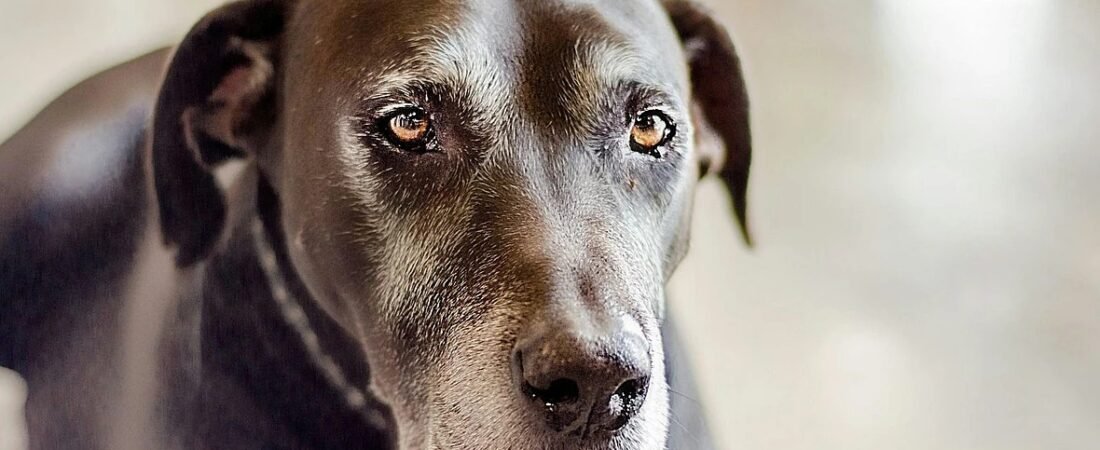
Ageing in dogs rarely arrives all at once. It usually shows up in small, gentle changes — a slower start in the morning, a grey muzzle, a nap that lasts a little longer than it used to. Noticing those changes early is one of the kindest things you can do for an older dog, because many of them are easier to help when you catch them soon.
This guide covers ten common signs of ageing in dogs and, for each one, a practical way to help. None of these signs on their own means something is seriously wrong, but a change that is new, sudden or getting worse is always worth talking to your vet about.
10 Signs of Ageing at a Glance
| Sign | What you may notice | Simple help |
|---|---|---|
| Grey muzzle and coat | Grey or white hairs around the face | Reassurance — it is usually normal |
| Slower movement | Stiffness after rest, slower stairs | Gentle walks, ramps, soft bedding |
| Less energy | Shorter play, longer naps | Shorter, more frequent walks |
| Weight change | Gradual gain or loss | Measured meals, regular weigh-ins |
| Cloudy eyes | A blue-grey haze in the eyes | Keep furniture in place, vet check |
| Hearing loss | Less response to calls | Hand signals, gentle touch |
| Dental changes | Bad breath, chewing less | Dental care, vet check |
| Toilet changes | More accidents, asking out more | More breaks, easy garden access |
| Sleep changes | Restless nights, pacing | Routine, calm evenings, vet advice |
| Less interest or confusion | Staring, getting stuck, less play | Enrichment, routine, vet check |
1. A Grey Muzzle and Fading Coat
A grey muzzle is often the first visible sign of ageing, and in many dogs it is simply a normal part of getting older. Some dogs start to grey at five or six, others much later. It does not hurt, and it does not mean your dog is unwell.
How to help: enjoy it — a grey muzzle is a badge of a life well lived. Keep grooming gentle and regular, as older skin can be more sensitive, and mention any sudden coat changes, patches or sore skin to your vet.
2. Slower Movement and Stiffness
Many older dogs are stiff when they first get up, especially after a long sleep or on a cold morning. They may take the stairs more slowly, hesitate before jumping into the car, or lag behind on walks they used to lead.
How to help: keep exercise regular but gentle, with shorter walks rather than one long one. A soft, supportive bed, a ramp or steps to the sofa or car, and non-slip rugs on smooth floors can make everyday movement much easier. If stiffness is new, sudden or painful, check with your vet.
3. Less Energy and Longer Naps
Older dogs often sleep more and play for shorter bursts. That is normal, but a sudden drop in energy, or a dog who no longer wants to do the things they love, is worth noting.
How to help: match activity to your dog’s day. A morning walk, a gentle play session and a sniffy wander in the garden may suit them better than a long hike. Keep their mind busy too — food puzzles, scent games and short training sessions are good low-impact enrichment.
4. Weight Gain or Weight Loss
Weight can drift in either direction as dogs age. Some become less active and gain weight; others lose muscle and weight, especially if their appetite changes or their teeth hurt.
How to help: weigh your dog regularly, feed measured meals, and keep treats to a small part of the day’s food. If your dog’s weight is changing steadily, or their appetite has changed, talk to your vet before changing their food.
5. Cloudy Eyes
A blue-grey haze in an older dog’s eyes is common and is often a normal age-related change. It can make vision a little less sharp, especially in dim light, but many dogs cope very well.
How to help: keep furniture in the same place, avoid moving water bowls and beds, and use a light at night if your dog seems unsure. Any sudden cloudiness, redness, squinting or discharge should be checked by your vet promptly.
6. Hearing Loss
Some older dogs hear less well, especially high-pitched sounds. They may not come when called, may startle when touched from behind, or may sleep through sounds that used to wake them.
How to help: use hand signals and visual cues alongside your voice, approach from the front where they can see you, and use a gentle touch to get their attention. Keep them on a lead in open areas if their recall is less reliable than it used to be.
7. Dental Changes and Bad Breath
Dental problems are common in older dogs. You may notice bad breath, tartar, red gums, chewing on one side, or a reluctance to eat hard food.
How to help: keep up dental care — brushing if your dog will allow it, dental chews suited to their size, and regular vet dental checks. Do not try to treat dental pain at home; your vet can advise on the safest care for your dog.
8. Changes in Toilet Habits
Older dogs may need to go out more often, may have accidents indoors, or may ask to go out at night. This can be frustrating, but it is rarely a behaviour problem — it is often a sign that their body needs a little more help.
How to help: offer more toilet breaks, especially first thing, last thing and after meals. Make garden access easy, and be patient and kind about accidents. If toilet changes are sudden, or come with drinking a lot more water, check with your vet.
9. Restless Nights and Changed Sleep
Some older dogs sleep well in the day but become restless at night — pacing, panting, asking to go out, or seeming unsettled. Others sleep so deeply that they are hard to wake.
How to help: keep a calm evening routine, give them a comfortable bed in a quiet spot, and offer a last toilet break before bed. If night-time restlessness is new or frequent, talk to your vet, as it can have several causes.
10. Less Interest, Confusion or Getting Stuck
Some older dogs become a little confused: staring into space, getting stuck behind furniture, forgetting a familiar route, or seeming less interested in people and play. These changes can be subtle at first.
How to help: keep routines predictable, keep enrichment simple and rewarding, and be patient. Do not assume it is “just old age” — your vet can check for other causes and talk through ways to support your dog’s comfort and confidence.
When to Check With Your Vet
Ageing itself is not an illness, but many age-related changes are easier to manage when they are spotted early. As a rule, check with your vet if a change is sudden, painful, getting worse, or affecting eating, drinking, toileting, movement or sleep. Regular senior check-ups — often every six months — are a good habit, and they give your vet a baseline to compare against.
If you are unsure when your dog counts as a senior, read When Is a Dog Considered a Senior? It explains the senior stage by size. For typical lifespans by size, see How Long Do Dogs Live? Average Lifespan by Breed Size.
A Practical Daily Routine for an Older Dog
Keep days calm and predictable. Short walks in the morning and evening, measured meals, fresh water, a soft bed, gentle play and a little mental stimulation go a long way. Add ramps, steps and non-slip mats where they help, and keep the house layout steady so your dog can move around with confidence. Most of all, keep spending time together — older dogs often value your company more than ever.
Frequently Asked Questions
At what age do dogs start showing signs of ageing?
It depends on size. Giant breeds may show signs at six or seven, large breeds at seven or eight, and small breeds often not until ten or later. Every dog is different, so watch your own dog rather than the calendar alone.
Is a grey muzzle a sign of illness?
Usually not. A grey muzzle is a normal part of ageing for many dogs. If greying is sudden, or comes with other changes such as hair loss, skin problems or weight change, check with your vet.
Should my older dog still exercise?
Yes, in most cases — but gently. Short, regular walks and low-impact play help keep muscles, joints and mood healthy. Adjust the length and pace to your dog, and talk to your vet if you are unsure how much is right.
How can I help my older dog sleep better?
Keep a regular routine, give them a comfortable, warm bed, offer a last toilet break before bed, and keep evenings calm. If restlessness or night waking is new or frequent, check with your vet.
When should I worry about a change in my older dog?
Check with your vet if a change is sudden, painful, getting worse, or affects eating, drinking, toileting, movement, sleep or mood. Early checks are usually simpler and kinder than waiting to see if it passes.
Sources
- American Kennel Club (AKC) — Senior dog care and signs of ageing
- American Veterinary Medical Association (AVMA) — Senior Pet Care guidance
- American Animal Hospital Association (AAHA) — Senior Care Guidelines for Dogs and Cats
Ageing changes a dog, but it does not change what matters most: a comfortable home, gentle care, regular vet visits and time with the people they love. Notice the small changes, help where you can, and let your vet help with the rest. An older dog may move a little slower, but they still have a great deal of love — and a great many good days — to share.