
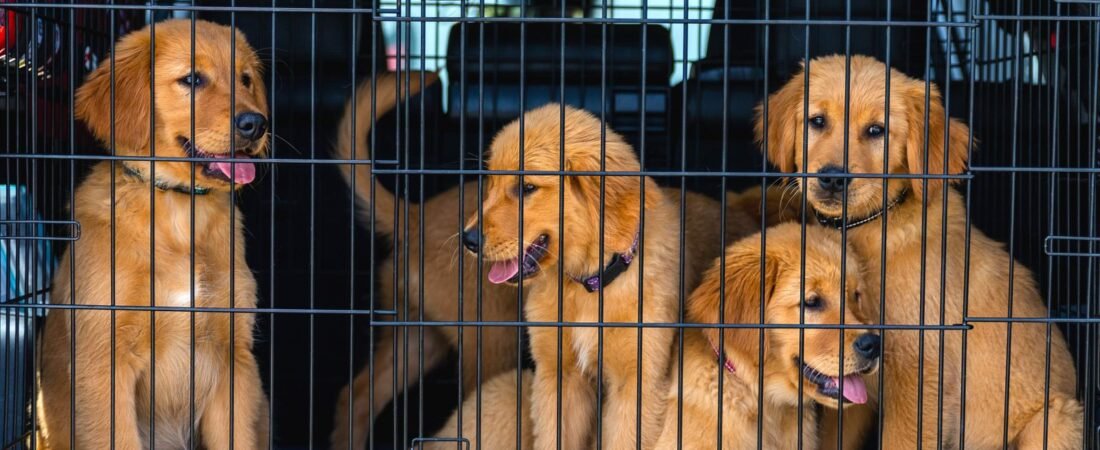
Crate training works best when it follows a routine, and the routine that works for an 8-week-old puppy will not be the same as the one that works for a 6-month-old. Young puppies need to go outside often, sleep a lot, and spend only short stretches in the crate. Older puppies can hold it longer, stay awake longer, and settle for longer rests. This guide gives you a simple day and night schedule for each age, so you can build a routine that fits your puppy instead of fighting against it.
The schedules below are typical starting points. Every puppy is different, and yours may need a little more or a little less time in the crate. The goal is not a perfect timetable. It is a steady rhythm of meals, play, toilet breaks, naps, and crate time that your puppy can learn to trust.
Crate training schedule by age at a glance
| Age | Daytime crate time | Night | Toilet breaks |
|---|---|---|---|
| 8 to 10 weeks | 30 to 60 minutes at a time | 2 to 3 wake-ups | Every 1 to 2 hours |
| 10 to 12 weeks | 1 to 2 hours at a time | 1 to 2 wake-ups | Every 2 to 3 hours |
| 3 to 4 months | 2 to 3 hours at a time | 0 to 1 wake-up | Every 3 to 4 hours |
| 4 to 6 months | 3 to 4 hours at a time | Usually through the night | Every 4 to 5 hours |
| 6 months and older | Up to 4 hours at a time | Through the night | Every 4 to 6 hours |
As a rough rule, many trainers suggest a puppy can hold it for about one hour per month of age, up to about six hours. That is a guide, not a promise, and it applies to waking hours. Never leave a puppy in a crate longer than it can comfortably hold it, and always give a toilet break right after crate time.
A sample day: 8 to 12 weeks
At this age, the day is built around short bursts of activity and lots of sleep. A typical day might look like this: wake up and go outside first thing, breakfast, a short play session, then a nap in the crate. Mid-morning, go outside again, play and train for a few minutes, then another crate nap. Lunch follows the same pattern, then an afternoon of play, toilet breaks, and naps. Dinner comes in the early evening, with a calm play session after, then a final toilet break before bed. Expect your puppy to sleep for much of the day, often 18 to 20 hours in total, and that is normal.
A sample day: 3 to 4 months
By three to four months, your puppy can stay awake a little longer and hold it a little longer. The day still follows the same rhythm, but the gaps stretch out. Mornings might include a longer walk or play session, and crate naps might last two hours instead of one. Meals are usually down to three a day, and many puppies start to sleep through most of the night, with at most one wake-up. This is also a good age to start leaving your puppy in the crate for short periods while you are in another room, so your puppy learns that the crate is a safe place even when you are not nearby.
A sample day: 4 to 6 months
At four to six months, the routine starts to look more like an adult dog’s day. Your puppy may manage three to four hours in the crate during the day, and most puppies sleep through the night by now. You can add a little more training and a longer walk, but keep the total crate time reasonable. A puppy that spends the whole workday in a crate is likely to be restless and unhappy, so plan for a midday break if you are away for long stretches. If you need help choosing the right size, see our guide on how to measure a dog for a crate step by step.
The night routine
Nights are where many owners struggle, and a calm routine helps a lot. In the evening, keep play gentle for the last hour, take away water an hour or two before bed if your vet is happy with that, and give a final toilet break just before bedtime. Put your puppy in the crate with a safe chew or a familiar blanket, and keep the room dark and quiet. If your puppy wakes in the night, take them out quietly, with as little light and fuss as possible, then put them straight back in the crate. Avoid play or long cuddles at night, or your puppy may start to look forward to the wake-up.
For the first few nights, keep the crate in your bedroom or nearby, so your puppy can hear you and you can hear your puppy. That closeness helps most puppies settle faster. You can move the crate further away later, a little at a time, once your puppy is sleeping well.
Making crate time positive
- Feed some meals in the crate, with the door open at first.
- Hide a few treats in the crate so your puppy enjoys going in to find them.
- Keep crate sessions short at the start, and build up slowly.
- Never use the crate as a punishment, and never drag a puppy into it.
- Give a calm goodbye when you leave, and a calm hello when you return.
Common mistakes to avoid
The most common mistake is moving too fast. If your puppy cries, whines, or paws at the door, you may have left them in too long, or moved to the next step before they were ready. Go back a step, shorten the sessions, and build up again. Another mistake is letting your puppy out when they are crying loudly, because that teaches them that crying opens the door. Wait for a quiet moment, even a brief one, before opening the crate. And if your puppy has an accident in the crate, clean it calmly and check the schedule. It is usually a sign that the gap between toilet breaks was too long, not that your puppy is being difficult. If you are still choosing a crate, our guide to what size crate for a Labrador shows how fit and routine work together.
Frequently asked questions
How long can I leave a puppy in a crate during the day?
It depends on age. A young puppy of 8 to 10 weeks usually manages only 30 to 60 minutes at a time, while a puppy of 4 to 6 months can often manage 3 to 4 hours. As a guide, many puppies can hold it for about one hour per month of age, up to about six hours.
Should my puppy sleep in a crate at night?
Many puppies sleep well in a crate at night, once they have been introduced to it gently. Keep the crate nearby at first, keep the night routine calm and quiet, and expect a few wake-ups in the early weeks. If your puppy seems distressed at night, check the fit, the bedding, and the routine, and talk with your vet if it continues.
What if my puppy cries in the crate?
Some whining at the start is common, especially in the first few nights. Check that your puppy has been outside, is not hungry or thirsty, and is comfortable. Then wait for a quiet moment before opening the door. If crying lasts a long time or your puppy seems panicked, shorten the sessions and build up more slowly.
When can I stop using the crate?
Many owners keep the crate as a safe resting place for a long time, even after their dog is house trained. You can start giving your puppy more freedom a little at a time, for short periods, once they are reliably house trained and calm when left alone. Some dogs keep using their crate as a den for years, with the door open.
A good crate routine is built one small step at a time. Start with short, positive sessions, follow a steady day and night rhythm, and let the schedule grow with your puppy. There will be nights when you are tired and days when the plan goes off track, and that is normal. What matters is the pattern over weeks, not any single day. Keep it calm, keep it consistent, and your puppy will learn that the crate is a safe, comfortable place to rest.
Sources
- American Kennel Club — guidance on crate training puppies
- American Veterinary Medical Association — guidance on housing and humane care for dogs
- ASPCA — guidance on crate training and house training
Photo: Robert So / Pexels