
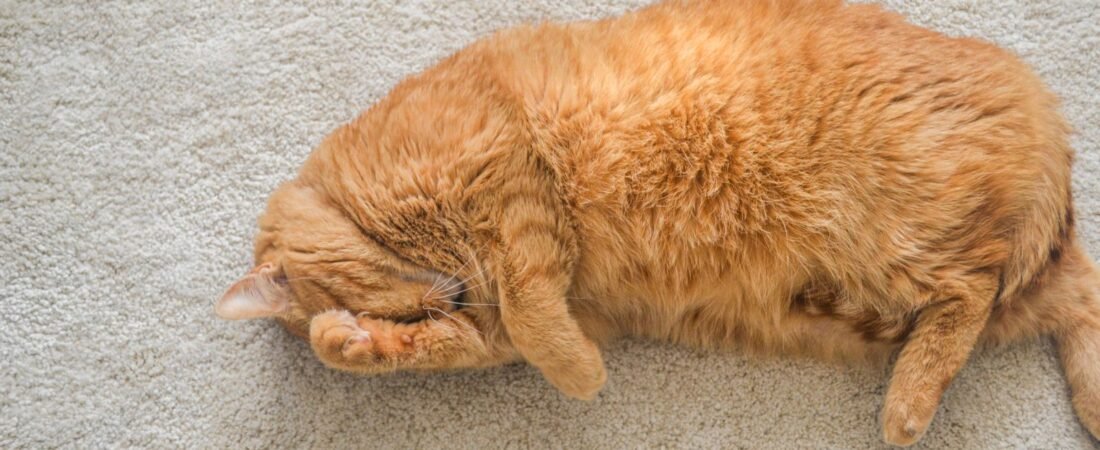
If your cat is carrying a little extra weight, you are not alone — and you are not a bad owner for noticing it. Extra weight creeps up quietly: a few more treats here, a fuller bowl there, a cat who prefers the sofa to the scratching post. The good news is that most overweight cats can slim down safely with a slow, steady plan. The key word is slow. Crash diets are dangerous for cats, so this guide is about a gentle calorie cut, careful measuring and a bit more movement, with your vet involved from the start.
How weight loss works for cats
Weight loss follows the same basic idea in cats as it does in people: a cat loses weight when she takes in a little less energy than she uses. The difference is the margin. Cats are small, so a small change in food makes a big difference, and a cut that looks modest to us can be a large cut for her. That is why vets usually aim for a loss of roughly 0.5 to 2 percent of body weight per month, or about 1 to 2 percent in many cases. At that pace, a 12-pound cat might lose roughly 1 to 3 ounces a week — slow enough to be safe, and fast enough to see real progress over a few months.
Speed matters because cats who stop eating, or eat far too little, can develop a serious liver problem called hepatic lipidosis, or fatty liver disease. It is most likely in overweight cats who go without food for more than a day or two, which is why a cat should never be fasted or put on a very low-calorie diet without veterinary supervision. If your cat stops eating, even for a day, check with your vet promptly. A safe plan always keeps her eating every day, just a little less than before.
How many calories should a cat eat to lose weight?
The short answer is: a little less than she needs to stay at her current weight, and the exact number depends on her size, age, activity and health. As a starting point, many vets work from the cat’s resting energy needs and then adjust. The table below gives typical ranges for an average indoor adult cat. Treat these as a starting point to discuss with your vet, never as a prescription, and never as a guarantee — two cats of the same weight can need quite different amounts.
| Current weight | Typical maintenance, approx. | Typical weight-loss starting point, approx. |
|---|---|---|
| 8 lb (3.6 kg) | 180–220 calories a day | 150–180 calories a day |
| 10 lb (4.5 kg) | 210–260 calories a day | 170–210 calories a day |
| 12 lb (5.4 kg) | 240–290 calories a day | 190–240 calories a day |
| 14 lb (6.4 kg) | 270–330 calories a day | 220–270 calories a day |
| 16 lb (7.3 kg) | 300–360 calories a day | 240–300 calories a day |
| 18 lb (8.2 kg) | 330–400 calories a day | 270–330 calories a day |
Notice that the weight-loss figures are roughly 15 to 20 percent below maintenance. That is the size of cut most vets start with. A bigger cut is not better — it raises the risk that your cat feels hungry and stressed, begs constantly, or stops eating altogether. If she is not losing weight after three or four weeks on a plan, your vet may trim the amount a little further, or check whether treats, table scraps or a second person feeding her are adding hidden calories. For a fuller picture of how daily needs are worked out, see our guide to how many calories a cat needs per day.
Work out where you are starting from
Before you change anything, get a baseline. Weigh your cat — stand on bathroom scales holding her, then weigh yourself alone and take the difference — and note the number. Then, for three or four days, keep a simple food diary: everything she eats, including treats, dental chews and any food she steals from another pet’s bowl. Most owners are surprised by how much the extras add up to. A single large treat can be 20 to 30 calories, which is a big share of a small cat’s day.
Also ask your vet to set a target weight and check her body condition. A healthy cat should have a waist you can see from above, a tummy that tucks up from the side, and ribs you can feel easily under a thin layer of fat. Your vet can also rule out health problems that cause weight gain or make weight loss harder, and can tell you whether a weight-management food would help. That vet check is especially important for older cats, cats with diabetes, kidney or thyroid problems, and any cat who has lost or gained weight suddenly.
A practical, gentle weight-loss plan
Start with measuring. Use proper measuring cups or, better still, kitchen scales, and feed the amount your vet agreed for the day, split into two or three meals. Free-feeding — leaving a full bowl down all day — makes it almost impossible to know how much she is eating, so switch to set mealtimes. If you feed wet food, check the calories on the label and work out how many grams or ounces make up her daily allowance; our guide to kitten age and feeding is not about weight loss, but the habit of measuring by weight rather than guessing is the same one that helps here.
Next, deal with treats. Keep them to no more than about 10 percent of her daily calories, and count them in her total. Swap large biscuits for a few pieces of her normal kibble, or a small piece of plain cooked chicken if your vet is happy with that. If several people in the house feed her, agree on one feeder, or use a small container with the day’s food in it so everyone can see what is left.
Then add movement, gently. Most indoor cats do not need a gym — they need play. Ten to fifteen minutes of play a day, split into short sessions with a wand toy, a crinkly ball or a puzzle feeder, burns a little energy and, just as importantly, keeps her busy so she thinks less about food. Scatter a little of her kibble around the house, or use a slow feeder, so she has to work for it. Increase play gradually, especially if she gets breathless easily, and keep it fun rather than frantic.
Finally, weigh her every two weeks and write it down. A slow, steady fall is exactly what you want. If her weight stalls for a month, or she loses weight too fast, talk to your vet before changing the food amount yourself. And expect the odd plateau — weight loss is rarely a straight line, and a week with no change does not mean the plan has failed.
Mistakes to avoid
- Cutting food sharply or skipping meals — this risks fatty liver disease in cats.
- Feeding a light or diet food but filling the bowl the same way — the portion still matters.
- Forgetting treats, table scraps and food from other pets’ bowls.
- Judging progress by eye alone — a fortnightly weigh-in is far more reliable.
- Comparing your cat with another cat — age, breed, activity and health change everything.
Frequently asked questions
How fast should a cat lose weight?
Aim for roughly 0.5 to 2 percent of body weight per month. Faster loss, especially if your cat stops eating, should be checked with your vet.
How many calories does an overweight cat need?
As a rough starting point, many vets begin at about 15 to 20 percent below maintenance — for example, roughly 190 to 240 calories a day for a 12-pound cat. Your vet should set the exact figure for your cat.
Can I just feed less of her normal food?
Often, yes — a measured reduction in her normal food works well. Some cats do better on a weight-management food, which is designed to keep them feeling full on fewer calories. Ask your vet which approach suits your cat.
What if my cat begs all the time?
Begging is common at first. Split her food into smaller, more frequent meals, use puzzle feeders, and add play sessions. If begging is constant or she stops eating, check with your vet rather than giving in with extra food.
Should I weigh my cat at home?
Yes — weighing every two weeks at home, on the same scales at the same time of day, gives you and your vet a clear picture of progress without the stress of frequent vet trips.
The bottom line
Safe weight loss for a cat is slow weight loss: a modest cut of roughly 15 to 20 percent from maintenance, measured food, treats counted in the total, a little more play, and a weigh-in every two weeks. Check with your vet before you start, keep your cat eating every day, and be patient — a few months of steady progress is far better than a fast drop that puts her health at risk. Your cat will thank you with more energy, easier movement and, in time, a healthier weight.
Sources
- ASPCA — Cat Weight Management
- American Veterinary Medical Association — Overweight Pets
- Cornell University College of Veterinary Medicine — Obesity in Cats
- American Animal Hospital Association — Weight Loss in Pets
Photo: Natalia Sevruk / Pexels