
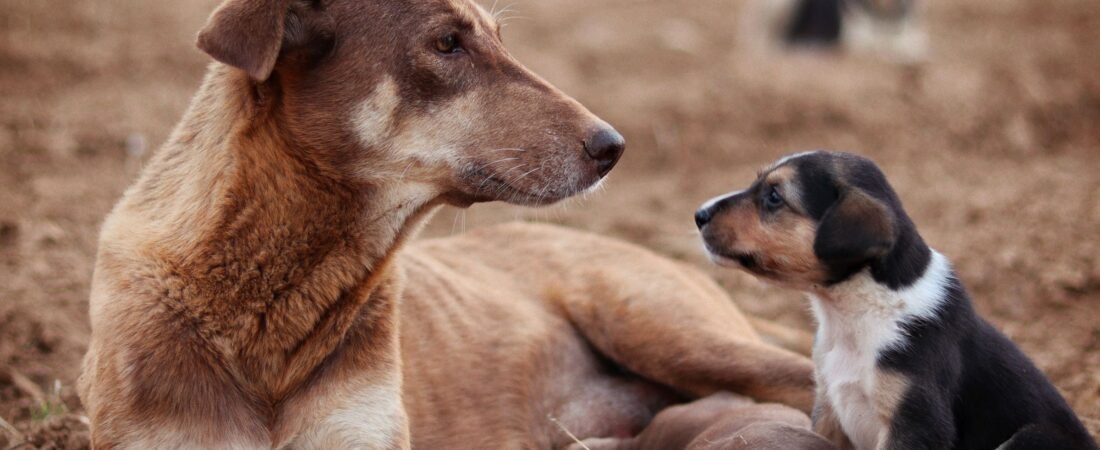
The first thing most owners notice is nothing at all. Your dog was bred a week or two ago, and she is eating the same, playing the same, sleeping in the same spot — and you keep watching her belly like it is going to give something away. It will not, not for a while. Dog pregnancy week by week is nine weeks of mostly invisible work, and then, almost all at once, everything changes.
That is why a dog pregnancy week by week map helps. Once you know what is happening inside and what to look for outside, the waiting stops feeling like guesswork. This dog pregnancy week by week guide walks through all nine weeks, from day 1 to day 63, with the signs, the vet checks, and the small jobs that make the last week calm instead of chaotic.
How long are dogs pregnant?
A dog’s pregnancy lasts about 63 days from ovulation — the day the eggs are actually released — which works out to roughly nine weeks. In practice, most dogs whelp somewhere between day 58 and day 68 after mating, and that spread is completely normal. A mating date is only an estimate of day one, because sperm can survive in the reproductive tract for several days before fertilization happens, so a due date is always a window, not an appointment.
The easiest way to pin that window down is to work from the mating date. If you know it, our Dog Pregnancy Calculator will give you the expected due date and the day range to watch.
Dog pregnancy week by week timeline
Here is the whole pregnancy at a glance in this dog pregnancy week by week timeline. The table below is the heart of this guide — save it, print it, or keep it open on your phone through the nine weeks.
| Week | Days | What is happening inside | What you will notice / what to do |
|---|---|---|---|
| 1 | 1–7 | Fertilization; embryos travel toward the uterus | No visible changes; feed and exercise as normal |
| 2 | 8–14 | Embryos reach the uterus and begin to implant | Still no outward signs; a day or two of mild nausea is possible |
| 3 | 15–21 | Implantation completes; the placenta starts to form | Nipples may “pink up”; appetite can dip briefly |
| 4 | 22–28 | Eyes, spinal cords, and faces form; the heart starts beating | Morning sickness for some; ultrasound can confirm around day 25–30 |
| 5 | 29–35 | Fetuses grow quickly; toes, claws, and whiskers develop | Waist thickens; appetite returns and grows; start switching to puppy food |
| 6 | 36–42 | Skeletons begin to harden; puppies grow noticeably larger | Belly visibly rounds; nipples darken; set up the whelping box now |
| 7 | 43–49 | Puppies put on most of their weight; fur grows in | She eats much more and moves slowly; X-ray from day 45 can count puppies |
| 8 | 50–56 | Puppies are nearly fully formed and move into position | Nesting begins; milk may appear; start taking her temperature twice a day |
| 9 | 57–63 | Puppies are ready; labor begins when her temperature drops | Temperature falls below 100°F (37.8°C) about 24 hours before labor |
In this dog pregnancy week by week timeline, these are typical ranges, not guarantees. Small dogs and large dogs follow the same timeline, and the number of puppies matters more than the breed — a dog carrying two puppies often shows later than a dog carrying eight.
Weeks 1–3: the quiet weeks
The first three weeks in a dog pregnancy week by week timeline are the hardest to wait through, because almost nothing happens that you can see. Inside, though, the work is well underway. The fertilized eggs drift down into the uterus during the first two weeks, and around day 15 to 21 they implant into the uterine wall and the placenta begins to form.
What you might notice in a dog pregnancy week by week timeline is subtle. Some dogs go off their food for a day or two around week two or three — a short bout of morning sickness that passes on its own. Her nipples may start to look a little pinker and slightly larger by the end of week three, which breeders call “pinking up.”
There is nothing special to do in these weeks. Feed her normal food in normal amounts, keep her walks normal, and resist the urge to start feeding her extra. Overfeeding in early pregnancy is one of the most common mistakes owners make, and it only leads to a heavier mother and a harder whelping.
Weeks 4–5: confirmation and the first real changes
Week four in a dog pregnancy week by week timeline is when pregnancy becomes real. The embryos are developing fast: the eyes, spinal cords, and facial features are forming, and the tiny hearts are beating. Around day 25 to 30, an ultrasound can usually confirm the pregnancy and show the heartbeats flickering on the screen. Many owners say that first ultrasound is the moment it finally sinks in.
In this dog pregnancy week by week guide, your dog may still have bouts of morning sickness in week four, and her appetite might be up and down. By week five it usually settles, and then the opposite problem starts: she gets hungry. This is the right time to start the gradual switch to a higher-energy food — a good-quality puppy food is the usual choice, mixed in a little more each day over a week so her stomach is not upset. Your vet can suggest the right food for her size and breed.
Her waist starts to thicken in week five, and by the end of it you can often tell she is pregnant just by looking at her from above. Weigh her now so you have a baseline: a healthy gain over the whole pregnancy is roughly 15 to 25 percent of her starting weight, most of it in the last three weeks.
Weeks 6–7: she starts to look pregnant
By week six of a dog pregnancy week by week timeline, there is no more guessing. Her belly rounds out visibly, her nipples darken and grow larger, and she starts to move a little more carefully. The puppies’ skeletons are hardening now, and they are growing fast.
This is the week in a dog pregnancy week by week timeline to set up the whelping box. Put it in a quiet, warm corner where she already likes to rest, line it with clean old towels or blankets, and let her investigate it on her own terms for a week or two before the big day. A box introduced on the day of labor is a box she will ignore; a box that has been part of the furniture for two weeks is home.
In week seven the puppies put on most of their weight and grow their fur. Your dog may need around a third more food than usual, split into three or four smaller meals, because her stomach has less room with puppies pressing on it. Short, gentle walks are still good for her, but let her set the pace. From day 45 onward, an X-ray can count the puppies — genuinely useful, because knowing how many to expect means knowing when labor is finished.
Weeks 8–9: nesting, temperature, and the final countdown
Week eight in this dog pregnancy week by week guide is when her behavior changes. She may start “nesting” — digging at blankets, rearranging her bed, carrying toys into the whelping box, and generally fussing over her sleeping spot. Some dogs go off their food a little. Milk may start to appear at the nipples. The puppies are nearly fully formed now, and if you rest your hand gently on her belly in a quiet moment, you can often feel them move. Start taking her temperature twice a day now with a regular digital thermometer — normal is around 101 to 102.5°F (38.3 to 39.2°C) — and write each reading down. You are watching for the pattern, not a single number: the drop.
That drop in a dog pregnancy week by week timeline comes in week nine. About 24 hours before labor starts, her temperature typically falls below 100°F (37.8°C), often to around 98 or 99°F (36.7 to 37.2°C). When you see that fall, labor is close. She will likely become restless, pant, pace, refuse food, and nest in earnest. Stay close, keep the whelping box ready, and keep your vet’s phone number where you can reach it without thinking.
Labor itself usually unfolds in stages — restlessness and contractions first, then the puppies arriving over several hours, with a normal gap of a few minutes to about two hours between them. If she strains hard for more than 30 minutes without a puppy, or more than two hours pass between puppies, call your vet right away.
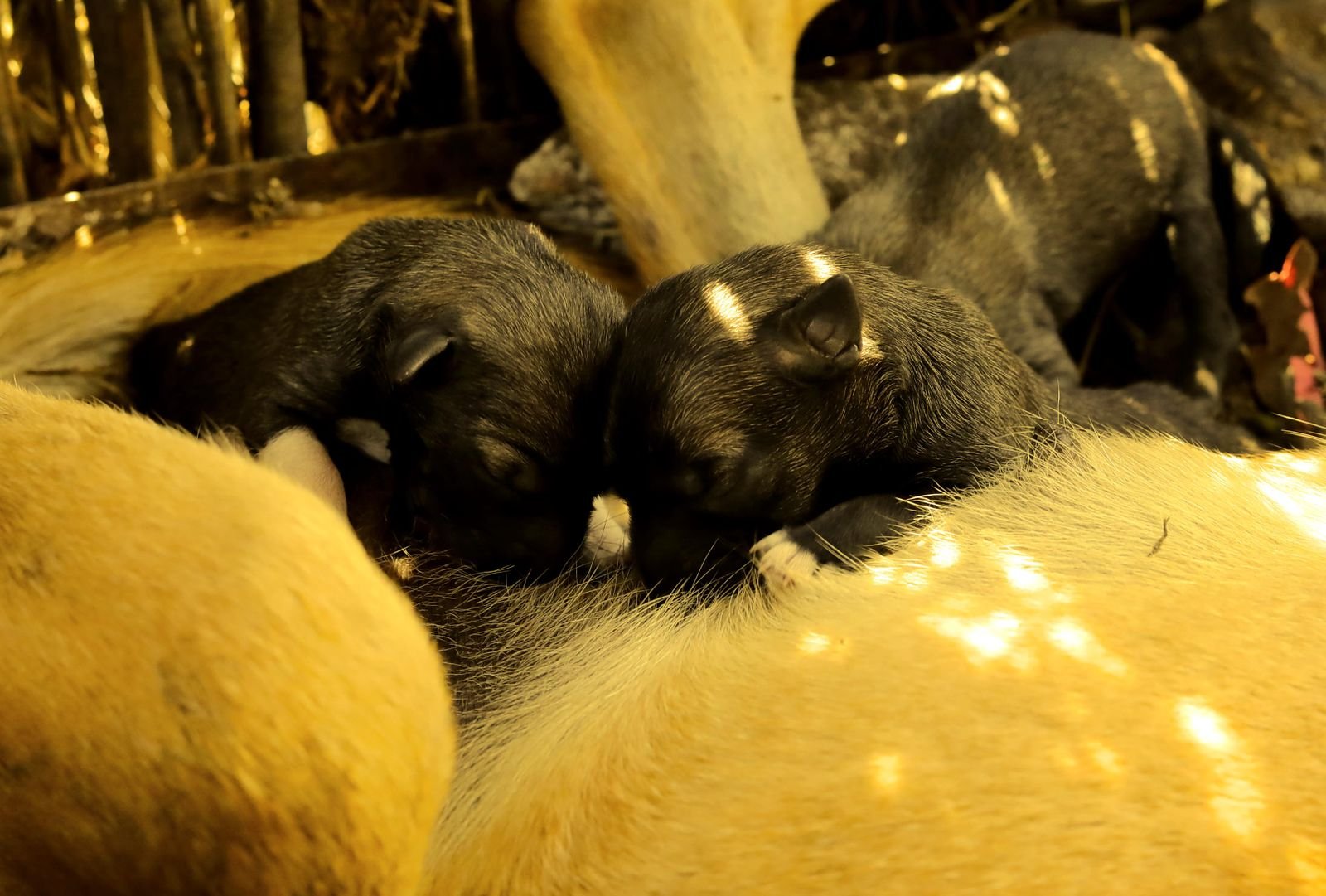
How to care for a pregnant dog: the practical checklist
Beyond the weekly milestones in this dog pregnancy week by week guide, the day-to-day care is simple, but it matters:
Feed for the stage, not the whole pregnancy. Normal food for the first five weeks, then gradually move to a higher-energy puppy food, increasing the amount in the last three weeks. Small, frequent meals beat one big bowl when her belly is crowded.
Keep her moving, gently. Short walks and normal play are good throughout. Skip rough play, long hikes, and anything that risks a fall or a knock to her belly, especially in the last two weeks.
Keep vet visits on schedule. A check-up around week four or five confirms the pregnancy and catches problems early. A second visit around week seven or eight, with an X-ray to count puppies, sets everyone up for a calm whelping.
Prepare the whelping area early. Warm, draft-free, quiet, and somewhere she already feels safe. Clean towels, a thermometer, your vet’s number, and a notebook for the temperature log — all in one place before week eight. If you have not worked out the due date yet, our Dog Pregnancy Calculator will give you the expected date from the mating date.
Watch, do not fuss. Most dogs manage pregnancy with very little help. Your job is mostly to notice changes in eating, drinking, energy, temperature, and behavior. If something changes suddenly — she stops eating entirely, vomits repeatedly, has discharge with a bad smell, or seems in pain — that is a vet call, not a wait-and-see. If you are ever unsure whether something is normal, your vet would much rather hear from you early than late.
Frequently asked questions
How do I know if my dog is pregnant in the first weeks?
Honestly, in a dog pregnancy week by week timeline, you often cannot tell in the first two or three weeks — there are usually no visible signs. The earliest hints are slightly pinker, larger nipples around week three and a brief dip in appetite. An ultrasound from about day 25 to 30 is the reliable way to confirm it.
How long are dogs pregnant for?
In a dog pregnancy week by week timeline, dogs are pregnant for about 63 days from ovulation, with a normal range of roughly 58 to 68 days after mating. Treat the due date as a window of several days, and watch her temperature in the final week for the real signal.
Do small dogs have shorter pregnancies than large dogs?
No — gestation length is essentially the same across breeds and sizes. What changes with size is litter size and, sometimes, how early the belly shows. A small dog carrying a large litter can look pregnant sooner than a large dog carrying two puppies.
What should I feed a pregnant dog?
In this dog pregnancy week by week guide, her normal food for the first five weeks, then a gradual switch to a high-quality puppy food, with the amount increasing in the last three weeks to roughly a third more than usual, split into smaller meals. Fresh water should always be available. Ask your vet about the right food and amount for your dog’s size and litter size.
When should I call the vet during pregnancy?
Call if she stops eating for more than a day, vomits repeatedly, has foul-smelling discharge, seems in pain, or strains for more than 30 minutes during labor without producing a puppy. Also book the routine checks: one around week four or five to confirm the pregnancy, and one around week seven or eight to count the puppies.
The bottom line
Nine weeks sounds long when you are waiting, and it passes quickly once the puppies arrive. The dog pregnancy week by week pattern to remember is simple: nothing to see for the first three weeks, confirmation around week four, visible changes from week six, and a temperature drop in week nine that tells you labor is about a day away. Keep her fed well, keep her moving gently, keep the vet in the loop, and have the whelping box ready long before she needs it.
And when the puppies are here and growing fast after this dog pregnancy week by week timeline, the questions change again — how much should they weigh, and are they growing on track? Our Golden Retriever puppy weight chart walks through the first year for one of the most popular family breeds. Or work out how old your dog is in human years with our Dog Age Calculator. The waiting is the hard part; the puppies are the reward.
Sources:
- American Kennel Club
- American Veterinary Medical Association
- American Animal Hospital Association
- Cornell University College of Veterinary Medicine
- Merck Veterinary Manual
Photo: Sudhir Sangwan / Pexels
In-content photo: Beyond India by Shubham Thakur / Pexels