
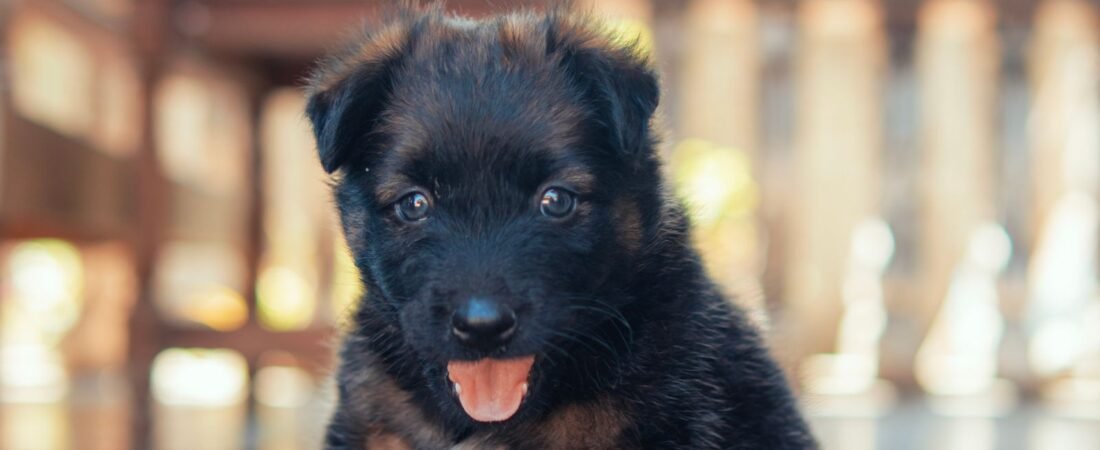
A German Shepherd puppy grows faster than almost any other popular breed — and it shows. One week they are a wobbly little pup with ears too big for their head, and a few months later they are a tall, leggy teenager who has outgrown their bed, their collar, and your lap. If you have just brought one home, you have probably already wondered whether they are growing too fast, too slowly, or just right.
This German Shepherd puppy weight chart by age shows typical weights for males and females, from eight weeks to twelve months, in pounds and kilograms. Use it as a guide, not a test. German Shepherds vary a lot by breeding line — working lines are often leaner and lighter than show lines — so a puppy a little outside these ranges can still be perfectly healthy, as long as they are growing steadily and look well in themselves.
How fast do German Shepherd puppies grow?
German Shepherds are large dogs, and large dogs grow fast — and for a long time. A puppy can gain several pounds in a single week during the fastest months, usually between three and six months old. By six months, most German Shepherd puppies have reached about half of their adult weight, and by twelve months they are close to their adult height. But they are not finished: most keep filling out, building muscle, and broadening through the chest until they are 18 months to 2 years old.
That long growth period is also why steady, even growth matters more than speed. A puppy that shoots up too fast, or carries too much weight while their joints are still developing, is at greater risk of joint problems later on. So a German Shepherd puppy that sits in the middle of the chart, growing steadily week by week, is in a better place than one that races ahead of it. The pattern is similar to the Labrador puppy weight chart by age, another large breed that grows fast early and finishes slowly.
German Shepherd puppy weight chart by age (male vs female)
The German Shepherd puppy weight chart below gives typical ranges for males and females separately, because the difference between the sexes is bigger in this breed than in most. These are typical ranges, not guarantees.
| Age | Male (lb) | Male (kg) | Female (lb) | Female (kg) |
|---|---|---|---|---|
| 8 weeks | 12–16 | 5.4–7.3 | 10–14 | 4.5–6.4 |
| 3 months | 22–28 | 10–12.7 | 18–24 | 8.2–10.9 |
| 4 months | 30–38 | 13.6–17.2 | 25–32 | 11.3–14.5 |
| 5 months | 38–47 | 17.2–21.3 | 32–40 | 14.5–18.1 |
| 6 months | 45–55 | 20.4–24.9 | 38–47 | 17.2–21.3 |
| 7 months | 50–62 | 22.7–28.1 | 42–52 | 19.1–23.6 |
| 8 months | 55–68 | 24.9–30.8 | 46–56 | 20.9–25.4 |
| 9 months | 58–72 | 26.3–32.7 | 48–60 | 21.8–27.2 |
| 12 months | 62–80 | 28.1–36.3 | 50–65 | 22.7–29.5 |
For context, the American Kennel Club lists adult male German Shepherds at around 65–90 lb (29–41 kg) and adult females at around 50–70 lb (23–32 kg). Most puppies in the chart above are still a little short of those adult figures at twelve months, and that is normal — the last year of growth is mostly muscle and chest, not height. Working-line German Shepherds are often at the lighter end of these ranges, and show-line dogs at the heavier end.
Male vs female: how big is the difference?
In German Shepherds, the male vs female difference is real and it grows with age. At eight weeks, males are usually only a couple of pounds heavier. By six months, the gap is often five to ten pounds, and as adults, males are typically 10–20 lb heavier than females, and taller and broader through the head and chest. Females are usually a little finer in build and slightly smaller overall, though there is plenty of overlap — a well-built female from large parents can easily outweigh a smaller male.
Temperament differences are often talked about, but size is the one difference you can actually measure. If you are choosing between a male and a female puppy, think about the adult size you can comfortably handle, and about training and exercise, rather than the weight chart alone. The same male–female pattern shows up in the Golden Retriever puppy weight chart by age, where males also finish noticeably heavier than females.
What affects your puppy’s weight?
Genetics and breeding line. Parent size is the best predictor of adult size, and breeding line matters too. Working-line German Shepherds tend to be leaner and more athletic, while show-line dogs are often heavier-boned. Puppies usually grow towards the size of their parents, so ask your breeder for the parents’ adult weights if you do not know them.
Food. Overfeeding is the most common reason a German Shepherd puppy sits above the chart, and it is also the most avoidable. Feed a complete puppy food made for large breeds, in the amounts your vet suggests for your puppy’s age and weight, and measure it rather than guessing. Keep treats to a small share of the day’s food, and remember that training treats count too — a German Shepherd in training can earn a surprising number of them.
Exercise. German Shepherd puppies need regular play and walks, but not hard, repetitive exercise while they are growing. Avoid long runs, repeated jumping, and long stair climbs in the first year, as their joints are still developing. Short, regular walks, gentle play, and training sessions are a better balance, with plenty of rest in between.
Is my German Shepherd puppy underweight or overweight?
The scales give you a number, but your hands give you the answer. Run your hands gently along your puppy’s ribs. You should be able to feel the ribs easily under a thin layer of fat, without pressing hard, and without the ribs sticking out sharply. From above, there should be a visible waist behind the ribs, and from the side, the tummy should tuck up a little towards the back legs. A German Shepherd puppy should look lean and athletic, never bony and never round.
If your puppy is consistently well outside the German Shepherd puppy weight chart, gaining very fast, or not gaining at all, talk to your vet. The same applies if their appetite, energy, or toilet habits change suddenly. Never put a growing puppy on a strict diet without veterinary advice — puppies need enough food to grow, and cutting back too far can do real harm. This is especially important in a large, fast-growing breed, where both underfeeding and overfeeding can affect how their bones and joints develop.
How to weigh your German Shepherd puppy at home
Until about four months old, the bathroom-scale method works well: weigh yourself, then weigh yourself holding your puppy, and subtract. After that, most German Shepherd puppies are too heavy to lift safely, and your vet’s scales at check-ups are the easiest option. Weigh weekly until six months old, then every two weeks until a year, and keep a simple note of each reading so you can see the trend over time. Weigh at the same time of day and on the same scales where you can, because a full tummy or a different set of scales can shift a reading by a pound or two.
Frequently asked questions
How much should a 3-month-old German Shepherd puppy weigh?
Most 3-month-old German Shepherd puppies weigh between 18 and 28 lb (8.2–12.7 kg), with males usually at the higher end of the range and females at the lower end. A puppy a little outside that range can still be perfectly healthy, especially if they are growing steadily.
When do German Shepherds stop growing?
German Shepherds reach most of their height by 12 months, but most keep filling out and building muscle until they are 18 months to 2 years old. Their chest often broadens last, so a one-year-old German Shepherd can still look a little narrow compared with the adult they will become.
Why is my German Shepherd puppy smaller than the chart says?
Usually it comes down to genetics — smaller parents, a working line, or simply being the smallest puppy in the litter. Some German Shepherds are just leaner, and that is fine as long as they are eating well, active, and gaining steadily. If they are not gaining at all, or seem unwell, check with your vet.
Why is my German Shepherd puppy bigger than the chart says?
Again, genetics first: big parents and show lines make big puppies. But do check the food, because overfeeding is the most common reason a German Shepherd puppy sits above the chart, and extra weight is hard on growing joints. The rib and waist check above, plus a word with your vet, will tell you more than the scales alone.
The bottom line
German Shepherd puppies grow fast, for a long time, and not always evenly — and that is normal for a large breed. Use the German Shepherd puppy weight chart as a friendly guide, keep an eye on the trend rather than any single number, and pay attention to what you can feel with your hands as well as what the scales say. Feed carefully, exercise gently while they are growing, weigh regularly, and enjoy the puppy months. They pass quickly, and the gangly pup at your feet will be a strong, loyal adult before you know it. If anything about their growth ever worries you, your vet is the best person to ask — a quick check is always better than weeks of wondering.
Sources
- American Kennel Club — German Shepherd Dog breed standard
- American Veterinary Medical Association — pet nutrition and healthy weight guidance
- American Animal Hospital Association — canine life-stage care guidelines
Photo: Nothing Ahead / Pexels